Chapter1 Transformer Models

2 min read Page Views

最近打算入门 NLP,在自学 🤗 的 NLP Course,但是感觉自己过于摆烂了。于是打算边学边做笔记,争取在期末之前把本课程学完

Pipeline

  • the most basic object in the 🤗 Transformers llibrary
  • It can:
    • feature-extraction(get a vector representing the text)
    • fill-task
    • ner(entity recognition)
    • question-answering
    • sentiment-analysis
    • summarization
    • text-generation
    • translation
    • zero-shot classification

Zero-shot Classification

  • you can casually assign the labels
python
1
2
3
4
5
classifier = pipeline("zero-shot-classification")
classifier(
   "I play Genshin Impact!",
   candidate_labels=["op","2-dimensional"]
)
1
2
3
4
5
classifier = pipeline("zero-shot-classification")
classifier(
   "I play Genshin Impact!",
   candidate_labels=["op","2-dimensional"]
)

Text Generation

  • involves randomness
python
1
2
3
4
5
6
generator=pipeline("text-generation")
generator(
  "prompts",
  max_length=15, #the max length of the text
  num_return_sequence=3 #How many texts are gonna generated
)
1
2
3
4
5
6
generator=pipeline("text-generation")
generator(
  "prompts",
  max_length=15, #the max length of the text
  num_return_sequence=3 #How many texts are gonna generated
)

Mask filling

python
1
2
unmasker=pipeline("fill-mask")
unmasker("I play <mask> Impact!",top_k=2) #top_k decides the time it does;<mask> depends on what model you are using
1
2
unmasker=pipeline("fill-mask")
unmasker("I play <mask> Impact!",top_k=2) #top_k decides the time it does;<mask> depends on what model you are using

Named entity recognition

python
1
ner=pipeline("ner",grouped_entities=True)#'grouped_entities=True' is used to enable the model to put multi-words together
1
ner=pipeline("ner",grouped_entities=True)#'grouped_entities=True' is used to enable the model to put multi-words together

Question answering

  • answer a question using given context
  • extracting answers from the context instead of generating answers
python
1
2
3
4
5
question_answerer=pipeline("question-answering")
question_answerer(
  question="where do I work?",
  context="My name is Sylvain and I work at Hugging Face in Brooklyn"
)
1
2
3
4
5
question_answerer=pipeline("question-answering")
question_answerer(
  question="where do I work?",
  context="My name is Sylvain and I work at Hugging Face in Brooklyn"
)

Summarization

python
1
2
3
4
5
6
summarizer=pipeline("summarization")
summarizer(
   """
context
   """
)
1
2
3
4
5
6
summarizer=pipeline("summarization")
summarizer(
   """
context
   """
)

Translation

python
1
2
translator=pipeline("translation",model="modelName")
translator("contex")
1
2
translator=pipeline("translation",model="modelName")
translator("contex")

Brief intro to Transformers

General categorization

  • GPT-like: auto-regressive
  • BERT-like: auto-encoding
  • BART/T5-like: sequence-to-sequence

Transfer Learning

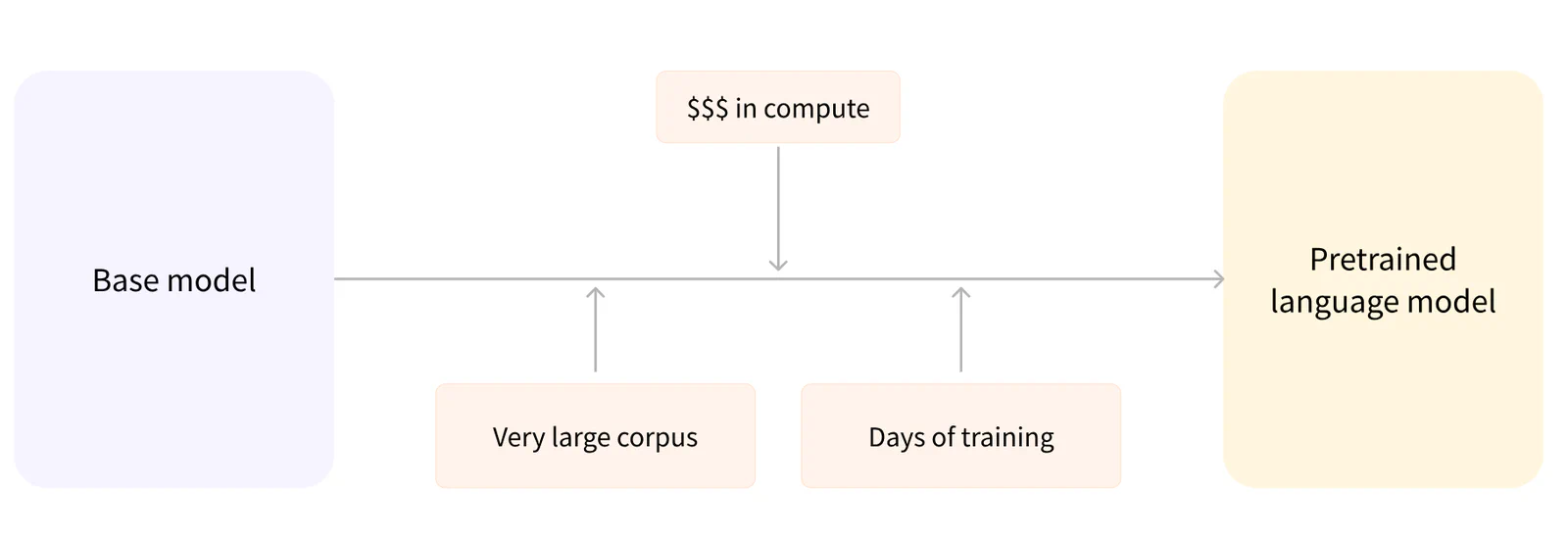
Pretraning

  • the act of traing a model from scratch
Fine-tuning

  • training on the top of pretrained models with a dataset specific to the target task
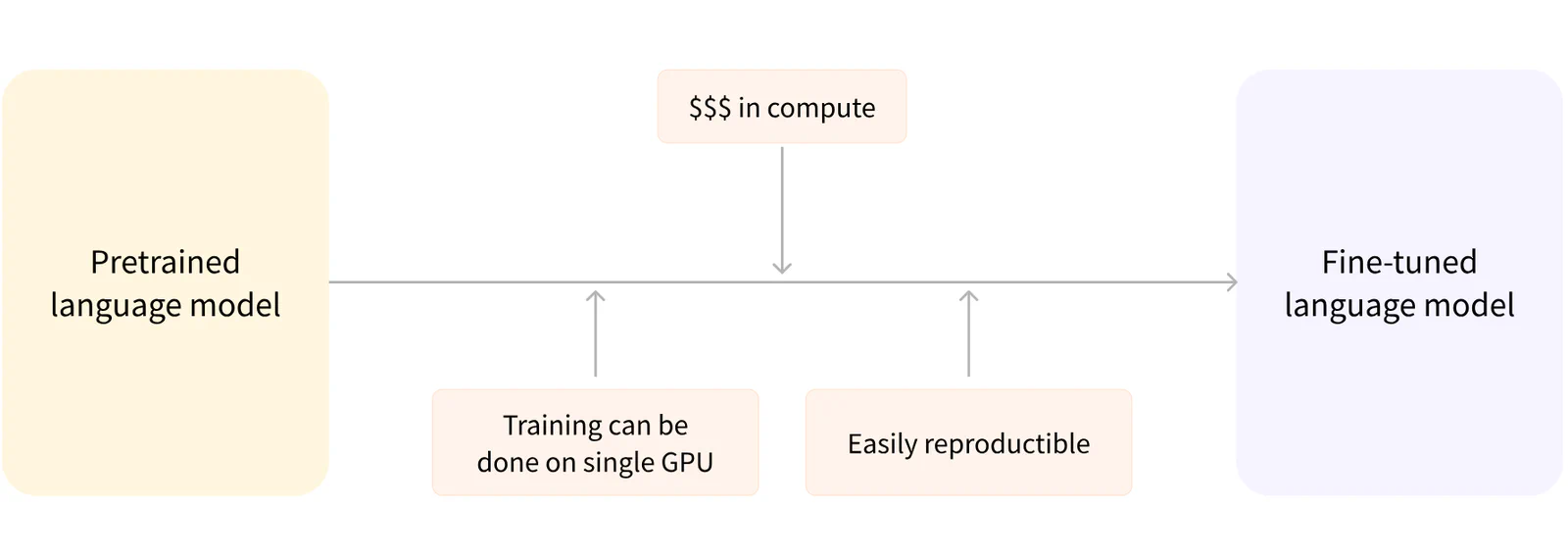
    image.png

General architecture

  • Transformers model is generally composed of two blocks:
    • Encoder: receives inputs and builds representations for them
    • Decoder: use the outputs of encoder to generate target outputs
  • Various tasks requires different blocks:
    • Encoder-only: sentence classfication; NER
    • Decoder-only: text generation
    • Encoder-decoder models or sequence-to-sequence models: translation or summarization

Attention layer

  • pay specific attention to certain words while ignoring others more or less

Original Architechture

  • the encoder translate all the words
  • the decoder is only allowed to translate by the past words; but later it can get all the outpus of encoer to better translate the word
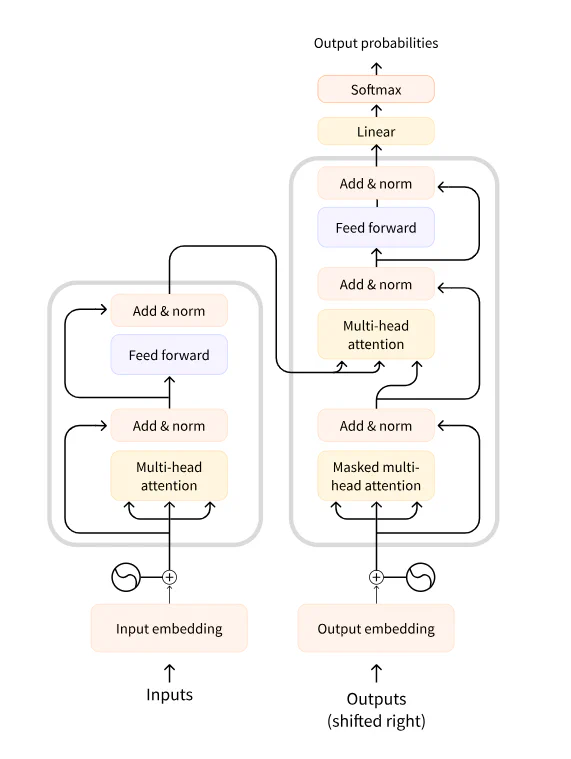
    image.png
Last updated on 2026-06-16